
Thinking Inside The Box
The Real Dangers of False Confessions

The best way to avoid being attacked by a shark is to stay out of the ocean.
Human psychology can be very telling and simultaneously very misleading. People’s outward appearances and behaviors can be directed in one way. Yet appear completely different in terms of reception. We often think that since there is an empirical truth about any given event, all we have to do to convince others of this truth—is to be honest, forthcoming, and cooperative.
We believe that everyone is seeking the truth and therefore, through enough effort, we can get someone else to see the world our way. If we only put in enough effort, we can convince someone else that our world view is the right one, and that we in fact share the same reality. Yet most of us know how difficult and frustrating this project can be, even about some of the most basic facts.
While truth seeking will always be a worthy endeavor, what we fail to recognize is that incentives, motivations, biases—and other cognitive clouding can cause people to filter information through other mechanisms. We also often fail to see that not all people and not all institutions are actually seeking the truth. What we often encounter, without recognizing it, is that various institutions and the people within them are not seeking the truth—they’re seeking outcomes.

One modern incarnation of this reality is the dynamic of custodial and non-custodial police interviews. If you have a television and a wife or a girlfriend, you’ve undoubtedly seen countless murder mysteries documentaries. Which typically feature dramatized clips of police interviews, interrogations, and confessions. While I am not troubled by the fact that violent criminals are being arrested, prosecuted and incarcerated. I am extremely troubled by the numerous cases of false confessions leading to real legal consequences for innocent people.
While I can’t do much about the broader issues of human behavior, bad policing, public naiveté, or a lack of insight and sophistication about the criminal justice system. I can provide some warnings and a public service announcement to clear up some of the smoke, provide insight, and keep innocent people safe. To be clear, this is not a “how to” guide for would be criminals. No more than a driver safety course would serve as a “how to” guide for street racers.
My goal is to inform you about the nature and mechanics of what happens inside the box (a police euphemism for the interrogation room) for several specific reasons.
First, you never know what situation you may end up in and you never know when you might end up in the crosshairs of the legal system.
Second, as a citizen, you may one day serve on a jury and hold the life of a fellow citizen in your hands. If you don’t understand how confessions occur and why false confessions are more common than people think. You may end up sending an innocent person to prison—which leads me to my last motivation.
I would rather free a guilty person than condemn an innocent person. People who think any conviction, is better than no conviction, are fundamentally misunderstanding the concept of justice.
While open cases and no arrests can be frustrating, closing a case based on bad evidence, only makes the problem worse. It sends an innocent person to prison and gives the victim and their family a false sense of closure. Justice isn’t actually served and the real criminal is still free.
Therefore, I’d rather the case remain open with no further casualties and force the police to actually do their job to close the investigation properly. With this framing and my typical preamble out of the way, let’s get into the mechanics of this machinery.
The Two Sides Of The Table
During any police investigation there is a fundamental operating system running in the minds of police investigators. While most people think police investigators are motivated by discovering the truth and getting justice for the victim. The reality in most cases is much more bureaucratic and disheartening. While this obviously doesn’t apply to all law enforcement agencies, nor their individual investigators. It is vital to recognize the reality of police work.
There is a reason it is called The Criminal Justice System. It is not called The Truth Seeking System nor The Victim Justice System. Does the wording of this actually matter in any day to day process? Maybe, maybe not. But it should serve as a point of inoculating context for anyone confused by the motivations of the legal system.
The Criminal Justice system is an adversarial system and is predicated on the idea that the entire power of the state is brought to bear on a particular citizen, for one simple purpose. To deprive that citizen of property, freedom, and in some cases—their life.
In most cases, the police officers and investigators are not motivated by finding the truth—they’re trying to solve a puzzle. They’re looking for answers to explain an event, not scientifically test a hypothesis to discover a truth. Unlike science, which is seeking answers to questions. Law enforcement already has the end state of the experiment. The crime has already been committed and the case already exists.
More often than not, their role is to assign blame and to get convictions. Not to discover that they were wrong about their previously conceived ideas. It is the difference between smelling an unfamiliar aroma and trying to figure out what the smell is. Versus smelling a pungent scent of shit in a room full of people and trying to figure out who farted.
From the point of view of the common citizen, the police interview is their opportunity to clear their name, provide their version of events, explain what actually happened and convince the police that they’re innocent. This is generally as effective as being the first person to boldly proclaim: “It wasn’t me…I didn’t fart!”
Unless you’re the victim of the crime and there is literally no way for you to have been involved in the criminal act itself. I generally don’t advise speaking to any police officer in the police station without an attorney. Even under the circumstances of being the victim, I recommend everyone obtain legal counsel before sitting down with a detective or an investigator. Remember, this is a formalized process and you’re representing yourself. Regardless of your guilt or innocence, most people are not well versed in the mechanics of the legal system, and should therefore not attempt to navigate the system on their own. Your so called cooperation can easily turn into a custodial interview and an interrogation about your involvement or knowledge of the underlying crime. Even if you’re the victim, you may have behaved in an illegal manner even while defending yourself—especially if a firearm is involved.
If you doubt this concept and you think I’m being paranoid, just do some research online. If you’re looking for a specific situation where the victim became the suspect. Take a look at the 2015 kidnapping of Denise Huskins in Vallejo, California. Before you ask—Netflix did do a documentary about that case.
Inside The Box
There are generally only a few reasons why someone would be asked to; “Come down to the station and answer a few questions…” Generally, none of these reasons are good for your well-being and none of them are intended to serve your longterm benefit.
First, and probably most obvious, the police suspect you of the crime. If you’re the primary suspect, the police are not required to tell you that you’re the suspect of the investigation.
In fact, the nicer they’re being to you, and the more effort they’re putting into convincing you that it is in your best interest to; “clear a few things up”—the more trouble you’re probably in.
Second, you may have some information relevant to the crime because you may have been at the scene and possibly witnessed something that could be of value to the investigation. While this may sound like a reassuring opportunity to help the police catch the suspect. Witnesses can easily become accomplices or suspects. Not by the virtue of the evidence, but because they end up talking their way into the jaws of the shark.
Finally, you may be a family member of the victim and you may have had nothing to do with the crime, but remember—they’re looking for someone to fit the mold, regardless of the evidence. You may inadvertently become the perfect fit for the suspect shaped mold. The significant other or a family member is always the prime suspects in any violent crime. Since statistically speaking, violent crimes are rarely random, and are rarely perpetrated by strangers.
Again, you are unlikely to know which category you’re really in during a police interrogation and the police will rarely tell you that you are a suspect. Generally speaking, they will simply side-step the question or simply tell you that you’re a witness and you’re helping them catch the perpetrator. In order to give the victim and the family a sense of closure and justice. Another critical misconception is that many people think the police are not lying to them or trying to trick them. This is an incredibly dangerous and false notion.
The police are legally allowed to lie to you during the course of an interview. They can make up witnesses and fabricate evidence, and they can make claims you cannot verify in real time. They’re not required to read you your rights unless they’re directly asking you questions which could potentially illicit an incriminating response. Every police interrogation starts with a basic conversation and rapport building. They will ask you non threatening questions and get you to simply feel comfortable in the room.
They will offer you a drink and make sure that you’re not anxious enough to storm out of the room. Even the room is set up to keep you in the box. There are no windows inside of police interview rooms because they don’t want you seeing the outside world and realizing that you’re not in it. They don’t want you to be able to keep track of the time. Which is why there are generally no clocks on the wall. The room is small and the desk is positioned between you and the investigator. The chair you’re occupying is facing away from the door. The door is the way out and that is the last thing they want you to see—a way out. Your way out becomes the investigator you’re speaking with. Even if you are read your rights at some point during the interview, it is done in a pleasant and non threatening manner.
I have never given Miranda Rights to any suspect in a formal way. One usually seen on television and in police shows. After speaking to them about everything other than the crime at hand and getting them to like me. I would present the waiver of rights as a way to keep the conversation going:
“So, I know you and I have been talking for a while and I’m really glad you’re helping us out today and I want to keep talking to you. I just want to make sure you’re still OK with staying here and helping me figure this thing out.
Of course you’re not in any trouble (not true), but I want to make sure that you understand we have to cover our
basisbases.So just like in the movies (this part usually gets a laugh)
I have to read this form to you. It basically says that you’re here voluntarily and that you still want to keep talking with me. I hope you’re still OK with talking to me, right?”
Over the past twenty or so years, I’ve conducted thousands (this isn’t hyperbole) of custodial and non-custodial interviews. I can count on one hand how many people invoked their right to an attorney, or simply refused to speak with me—after realizing that they were about to say something they could never take back. Rightly or wrongly, if you are at the police station the police have their attention on you, and whether you know it or not, you are part of the investigation.
Once you’re inside the machinery you have to protect yourself. Most people think that being reluctant to cooperate and ask for an attorney right off the bat makes them look guilty, but this is the most prudent decision you can make. This fundamental misunderstanding is exactly what many investigators count on. The misunderstood nature of the interview and being reluctant to answer questions and ask for a lawyer, is one of the biggest risks you can take during the course of any investigation.
Remember, if the police want to interview you at the police station. They’re not just looking for the truth—they’re looking for evidence. Evidence they hope you will voluntarily provide so they can close the case. If you were under arrest and being charged with a crime. You would know it without any doubt. If there was enough evidence against you. The police would not be showing up to your house to ask you questions. They would be showing up with an arrest warrant and handcuffs.
To be clear, I’m not encouraging you to conceal crimes and to refuse to provide evidence. I’m simply telling you that this can be done in a safe manner or it can be done recklessly. You can and should cooperate with any investigation where ever possible, but my advice is to do so with an attorney by your side at all times. I’m not telling you to stay out of the ocean entirely. Just don’t be a moron and don’t take unnecessary risks.
Let’s Go Over That One More Time
As mentioned in my last article about deception and lying, interviews and interrogations are all about pacing, timing, and endurance. The psychological pressures being exerted here is the same method employed by car dealers. The sales person will keep you in the dealership as long as possible, and will gradually wear you down until you sign for the car.
Once the investigator thinks they’re on the right track and that you’re the guilty party. They’re no longer looking for evidence which will lead them to the suspect. You have become the suspect and they will now reverse engineer the evidence to make it fit you. Their goal is to keep you in the police station until you sign the confession. If this sounds terrifying and unnerving—good! It means you’re listening and you’re taking this seriously.
While not all investigators are skilled interrogators, many know enough to get even sophisticated and intelligent people to confess. Stressed out and exhausted people will often confess to a clumsy and poorly trained investigator. Please, don’t allow your hubris to convince you that you would never admit to something you didn’t do.
You have no idea how real shit can get—until it gets real. Realize that under the right circumstances and under the right pressure. Most of us are capable of not thinking clearly and making terrible choices. The addition of a skilled person pushing you in that direction, makes this a much more common, than most people realize.
The mechanics of most interviews and interrogations follows a similar path.
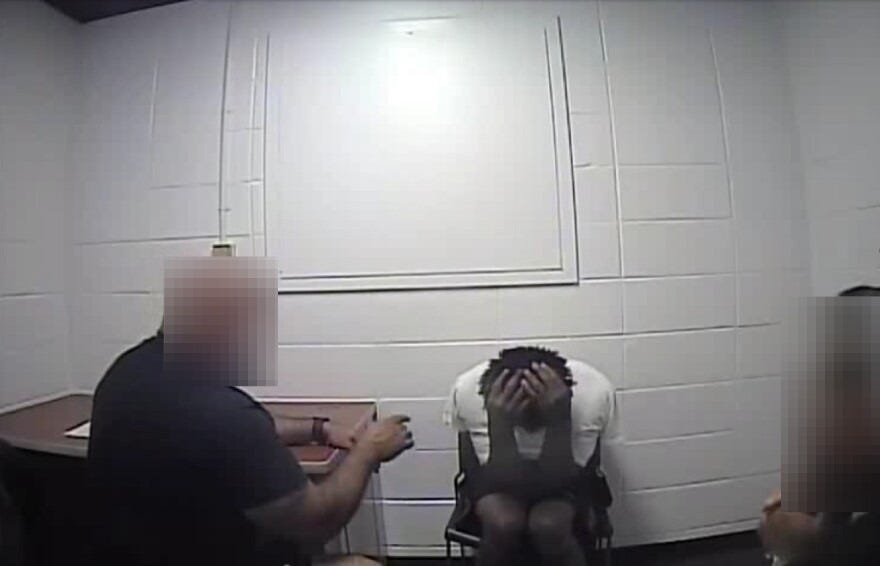
The police will bring you in and thank you for your time. You will be offered something to drink and they will thank you again for speaking with them. The framing of the conversation will be to get the background information, and to fill in some gaps about the case or the victim.
This will be done in a non-threatening manner and at no point will they give you any indication that you are in fact the suspect. You will not be read your rights or placed in handcuffs, because at this point, you’re there voluntarily.
You’re not yet being asked questions which could illicit an incriminating response. They will start asking you very basic questions about your life, your biographical information, what you do for work, and any other background information they may need.
This can take as long as one hour because the interview will change pace from a formal question and answer. To the investigator sharing stories and anecdotes to keep you calm and relaxed.
From the point of view of the investigator, the longer you’re in the room, the more likely you are to keep talking. The more you’re talking, the more likely you are to say something incriminating.
Depending on your demeanor, your behavior, your responses, your body language, and various other factors. The investigators are forming a mental picture. They’re deciding whether or not you are, or could be, a potential suspect. Unbeknownst to you, you may have already painted a huge scarlet letter on your forehead, simply by being pleasant and talkative. Your nervousness, anxiety, lack of eye contact or how you give your answers—may be pouring fuel on an invisible fire.
At this point, they may decide to finally address the elephant in the room and start asking you questions about the alleged crime at hand. You may be given your Miranda Warnings at this point, but as stated above, this will be done in a very casual and non-threatening manner.
They will never tell you all of their evidence and they will never show you all of their cards. Their inquiry will begin with getting you to provide your whereabouts and getting you to give them information about the topic at hand.
You may be asked to account for your actions or movements on a given day, or you may be asked to recount the nature of your relationship with a friend or coworker.
The questioning will continue and the investigators may have you repeat certain key details. They’re not doing this because they didn’t hear you the first time.
This is done to lock you into the story and get you to repeat the information over and over. This causes you to expend valuable mental energy by focusing on times, dates, locations and people. If you make a mistake, this may be viewed as deception rather than a symptom of fatigue or stress.
The story will be summarized several times, both by you and the investigators, and after each summary—the investigators will parse out certain details to get more granular information out of you about the subplot of the event.
By now, you’ve probably been in the interrogation room for several hours. Typically without being offered the opportunity to use the bathroom and without being given food. If you ask to use the bathroom, the investigator will generally side-step this request and tell you that they’re almost done. Only to launch into another round of inquiry.
The final step is the reveal and the accusation. This is where you may be told that a witness saw you commit the crime or that there is some other form of evidence placing you at the scene.
You will be given what is known as the “Optional Question” and you will find yourself on the horns of a dilemma. The evidence will not be provided for you to review and you will certainly never be told that it is fabricated.
All of this is perfectly legal by the way. The only way out of this situation will be presented as full cooperation and telling the investigators what they want to hear. You will be told that you will face a lengthy trial and how successful the district attorney is at prosecuting these sorts of crimes.
The investigator will tell you that they’re the only friend you have and that they don’t believe you did this horrible act out of malice.
You lost your temper and made a mistake. All you have to do is explain to them what really happened so they know that you’re not a monster.
Again, if you find yourself doubting that any of this is possible, while comfortably sitting in your home, or while driving your car. You’re simply not making contact with the relevant variables and the true dynamics of an interrogation. This orientation is dangerous and unrealistic. It is just as dangerous and unrealistic as believing that because you are a good swimmer, you can’t drown or be attacked by a sharks.
Sharks don’t swim above the surface and rarely announce their presence, let alone their intentions. They appear quietly and strike swiftly and suddenly. Most people don’t drown because they decide to go swimming during a hurricane. They drown because they overestimate their skill and underestimate the rip current beneath the waves.
Truly skilled interrogators don’t start the process by throwing you into the deep end and trying to drown you. They bring you into the water step-by-step, calming your nerves, while you still feel the sand beneath your feet. Even when you’re in less shallow waters, you are allowed to feel that you’re in control, despite being pulled further away from the shore. Before you know it, you’re in too deep, gasping for air and helplessly battling against the overwhelming waves. No matter how good of a swimmer you may think you are, the ocean and the shark gets a vote.
If you want to avoid drowning. Stay on the beach where you can stand up and walk back to shore. If you want to avoid joining the thousands of people wrongly imprisoned for crimes they didn’t commit. Ask for an attorney, before speaking to police investigators—and never put yourself in a room with people like me.
Was this a(nother) probable Easter Egg or just a typo regarding a baseball idiom referring to defending all bases to prepare for any contingency?
"Of course you’re not in any trouble (not true), but I want to make sure that you understand we have to cover our basis."
Unless 'basis' is a singular term being used to define the core rationale of something.....
Cheers!
I'm usually a reader because I read faster than the speaker reads but I do enjoy listening to your voice. Calm, thoughtful and analytical.